For most homeowners, the choice between smart lighting and traditional lighting boils down to initial cost versus long-term convenience. You're probably wondering if the higher price tag for smart bulbs and hubs is truly worth it. While traditional lighting offers simplicity and lower upfront expenses, smart systems provide advanced control, energy efficiency, and integration with other home devices. A typical smart bulb can cost $15-$50, while a standard LED bulb is just $2-$5.
Quick answer: Smart lighting offers significant long-term energy savings and convenience over traditional setups, making it a worthwhile upgrade for many. You'll gain remote control, scheduling, and potential energy reductions of up to 80%. Expect to pay $15-$50 per smart bulb, compared to $2-$5 for a traditional LED, but savings could reach $100 annually.
Understanding the Differences
Smart lighting goes beyond simply turning lights on and off. It's an interconnected system that lets you control your home's illumination from anywhere, often through a smartphone app or voice commands. Traditional lighting, conversely, relies on physical switches and basic circuits. It's a simple setup, but it lacks modern features.
You'll find that traditional lighting is primarily about functionality. Flip a switch, and the light comes on. There's no dimming from your couch unless you install a specific dimmer switch, and you can't set schedules. Most traditional setups use incandescent, CFL, or standard LED bulbs. Incandescent bulbs, for example, cost about $1 each but only last around 1,000 hours.
Smart lighting, however, offers much more. You can change colors, adjust brightness, and create scenes (e.g., "movie night" mode). Many systems integrate with smart home platforms like Apple HomeKit, Google Home, or Amazon Alexa. This means you can say, "Alexa, turn on the living room lights," and they'll respond. Some systems, like Philips Hue, require a central hub, typically priced around $60, to connect all your bulbs. Other brands, such as Sengled, use Bluetooth or Wi-Fi directly, eliminating the need for a hub.
Here's a quick comparison:
| Feature | Traditional Lighting | Smart Lighting | | :---------------- | :------------------------------ | :------------------------------ | | Control Method | Wall switches | App, voice, sensors | | Energy Efficiency | Varies (LEDs are best) | High (mostly LED) | | Cost Per Bulb | $1-$5 | $15-$50 | | Lifespan | 1,000-10,000 hours | 15,000-25,000 hours | | Remote Access | No | Yes | | Scheduling | No | Yes | | Color/Brightness | Fixed (unless dimmable switch) | Adjustable |
Energy Savings and Cost Implications
The initial investment for smart lighting is higher, that's clear. A single smart LED bulb might cost you $20, while a comparable traditional LED is just $3. However, smart lighting can significantly reduce your electricity bills over time. Smart bulbs are almost exclusively LED, which consume 75-80% less energy than incandescent bulbs.
You'll also benefit from features that traditional setups can't match. Scheduling lights to turn off when you leave the house or dimming them automatically can cut energy waste. Motion sensors can ensure lights are only on when a room is occupied, saving another 10-15% on lighting costs. For a household spending $150 annually on lighting, smart technology could save $50-$120 per year. Over a bulb's 15,000-hour lifespan, that's a substantial amount.
Consider a full home setup. Equipping a three-bedroom house with 20 smart bulbs could cost $300-$1,000, plus another $60 for a hub if needed. The same number of traditional LED bulbs would be $40-$100. Despite the upfront difference, the longevity of smart LEDs (often 15-25 years) means fewer replacements. Traditional incandescent bulbs, lasting only about one year, require frequent changes, adding to maintenance costs and hassle. For outdoor areas, smart lighting can also integrate with security systems, offering efficiency and peace of mind. Check out our guide on advanced outdoor security lighting techniques for home for more ideas.
Convenience and Lifestyle Benefits
The real appeal of smart lighting lies in its convenience. You're not tied to a wall switch anymore. Imagine being able to turn off all the lights from your bed with a voice command, or scheduling porch lights to come on automatically at sunset. These aren't minor perks.
Many smart lighting systems let you group lights into zones. You can control your kitchen lights separately from your dining room lights, for instance. Vacation mode, a common feature, simulates occupancy by turning lights on and off randomly, adding a layer of security. This is something traditional lighting can't do without a separate timer device.
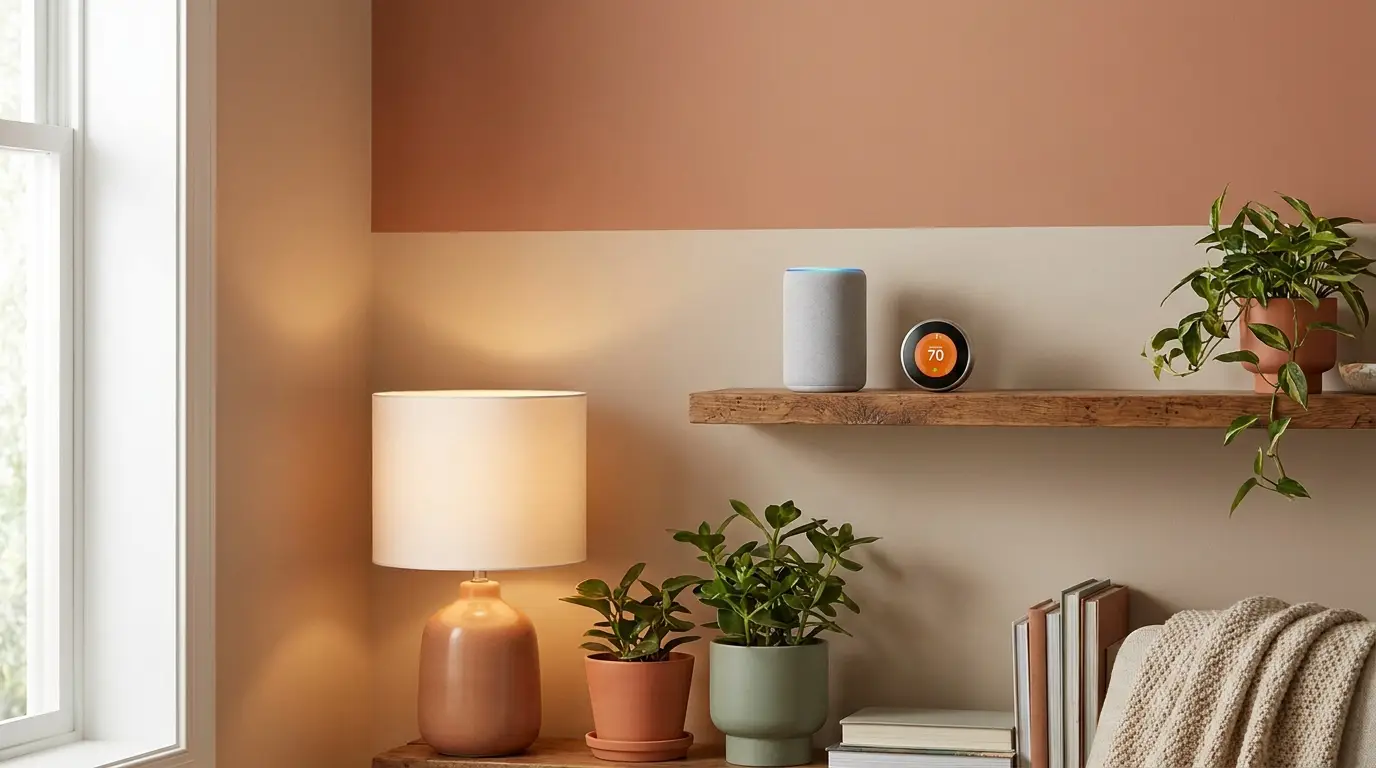
The integration with other smart home devices further enhances the experience. You can link your smart lights with smart thermostats or security cameras. If your security camera detects motion, your smart lights could flash red. This level of automation simplifies daily routines and enhances comfort. You'll appreciate not having to walk into a dark house, especially if you're carrying groceries.
Installation and Compatibility
Installation varies significantly between the two types. Traditional lighting is generally straightforward. You'll screw in a bulb, and it works. Basic electrical wiring knowledge is sufficient for most replacements. Our article on basic electrical wiring can help with simple tasks.
Smart lighting can be a bit more involved. Most smart bulbs fit standard E26 or E27 sockets, so you won't need new fixtures. However, you'll need a reliable Wi-Fi network. Some systems, like those from Philips Hue, require a hub to be connected to your router. This hub communicates with the bulbs using a protocol like Zigbee. Other brands, like Wyze or TP-Link Kasa, use Wi-Fi directly, making setup simpler, but they can sometimes put more strain on your home network.
You'll also need a smartphone or tablet to set up and control the lights initially. Compatibility with your existing smart home ecosystem is another factor. Ensure the bulbs you choose work with Alexa, Google Home, or Apple HomeKit if you plan to use voice control. This ensures all your devices can communicate effectively.
Which Should You Choose?
Deciding between smart and traditional lighting depends on your budget, tech comfort, and priorities.
Choose smart lighting if you:
- Want long-term savings: The energy efficiency and longevity of smart LEDs mean lower utility bills and fewer replacements over 15-25 years.
- Value convenience and automation: Remote control, scheduling, and integration with voice assistants simplify daily life.
- Are tech-savvy: You're comfortable setting up apps and managing Wi-Fi connected devices.
- Prioritize security: Features like vacation mode and motion-activated lighting add extra protection.
Choose traditional lighting if you:
- Have a strict budget: The upfront cost is significantly lower, making it ideal if you're not ready for a larger investment.
- Prefer simplicity: You just want lights that turn on and off with a switch, without extra features.
- Don't have a smart home ecosystem: If you don't own smart speakers or other connected devices, some smart lighting features might feel less useful.
- Need immediate replacements: Traditional bulbs are readily available and cheaper for quick fixes.
In the end, smart lighting offers a compelling upgrade for most modern homes, providing energy efficiency, enhanced control, and improved security. The initial investment pays off through lower operating costs and a more convenient living experience.
Sources
- U.S. Department of Energy. "LED Lighting." Energy.gov.
- Philips Hue Official Website. "Why Choose Hue."
FAQ
What's the average lifespan of a smart LED bulb?
Smart LED bulbs typically last 15,000 to 25,000 hours, or about 15-25 years with average use of 3 hours per day. This is significantly longer than traditional incandescent bulbs, which only last around 1,000 hours. You won't be changing them often.
Can smart lighting save me money on electricity?
Yes, you'll save money. Smart lighting, primarily using LED technology, can reduce electricity consumption by 75-85% compared to incandescent bulbs. Features like scheduling and motion sensors further cut energy waste, potentially saving $50-$150 annually for an average home. These savings add up over a few years.
Do I need a hub for all smart lighting systems?
No, not all smart lighting systems require a hub. Brands like Philips Hue and IKEA Tradfri use a hub to connect their bulbs, typically priced at $60-$80. However, many newer systems from companies like TP-Link Kasa, Wyze, or Sengled connect directly to your home Wi-Fi network, eliminating the need for an additional hub.
Is smart lighting compatible with older homes?
Yes, smart lighting is compatible with most older homes. Smart bulbs use standard screw-in bases (E26/E27) just like traditional bulbs, so they'll fit existing fixtures. The main requirement is a stable Wi-Fi network, which you'll need for setup and control. You won't need to rewire your entire house.