Smart lighting systems combine efficiency with aesthetics, offering homeowners solutions to lower electricity bills while improving home ambiance. With brands like Philips Hue, Lutron, and GE Lighting leading the market, you can automate lighting schedules, adjust brightness, and even change colors, all while reducing energy consumption significantly.
Benefits of Smart Lighting Design
Smart lighting isn't just about convenience. It saves money and enhances comfort. LED smart bulbs, for example, consume 80% less energy than traditional incandescent bulbs. A typical LED bulb uses 10 watts versus 60 watts for incandescent, while lasting up to 25,000 hours compared to 1,000 hours for standard options. These savings add up, especially in larger homes.
Motion sensors further cut energy waste. Instead of manually switching lights on and off, sensors activate lighting when movement is detected. For instance, the Lutron Maestro motion sensor can be programmed to turn lights off after 15 minutes of inactivity, ideal for spaces like hallways or laundry rooms.
Color-changing bulbs like Nanoleaf and Philips Hue can enhance ambiance for any occasion. Warm light works for relaxation, while cooler tones improve focus. You'll find these settings particularly useful in multifunctional spaces like living rooms or home offices.
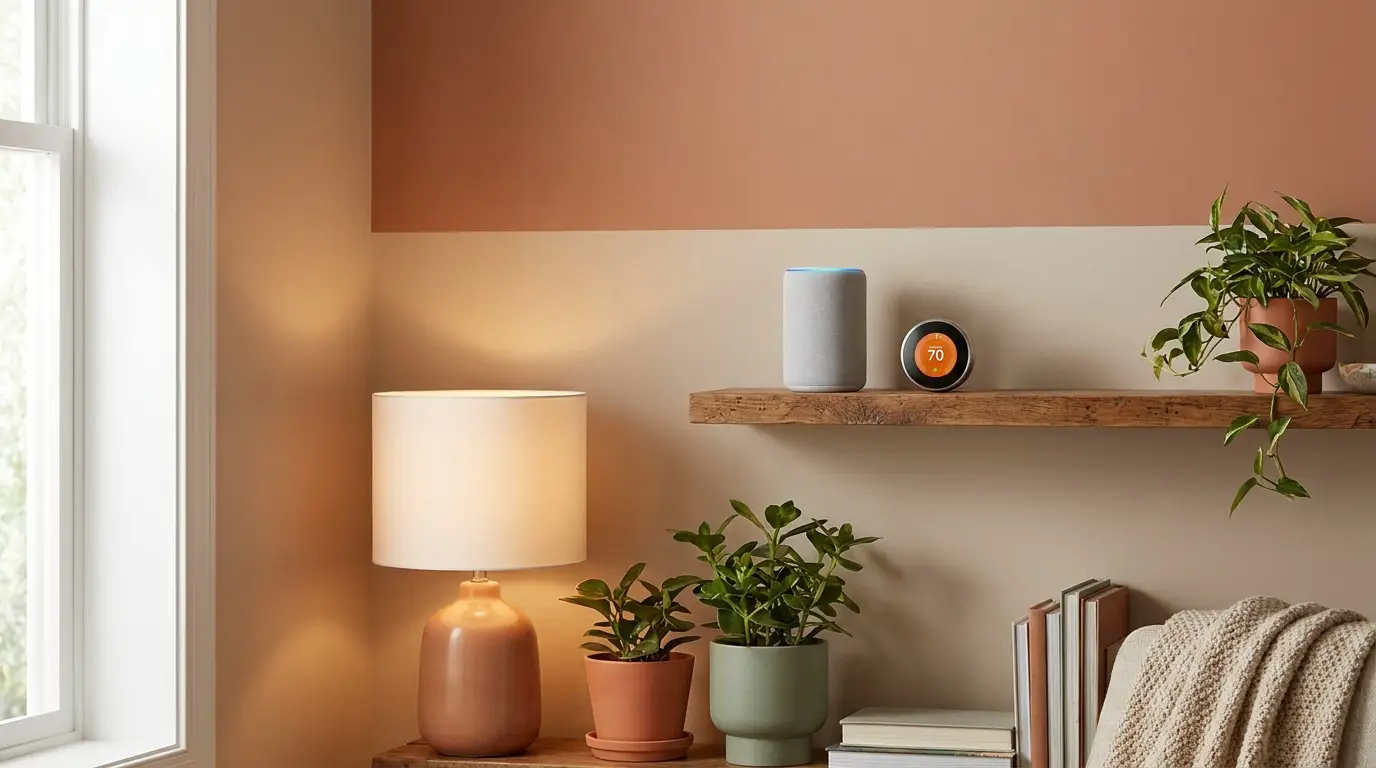
Don't overlook compatibility with smart home hubs. Systems like Samsung SmartThings or Amazon Echo allow you to control multiple devices, including lighting, from one app or voice command. For wiring tips to integrate smart switches, check out basic electrical wiring.
Choosing the Right Smart Bulbs
Finding the best smart bulbs depends on features, compatibility, and price. For budget-conscious homeowners, Sengled smart bulbs offer options under $20 per bulb. These connect directly via Wi-Fi without a hub, simplifying setup.
For advanced features like color temperature adjustment, consider Philips Hue or LIFX. Philips Hue starter kits cost around $70-$100 and include a hub for smooth integration. LIFX bulbs, priced at $35-$50 each, don't require a hub and offer brighter output (1100 lumens versus Philips Hue's 800).
If you prioritize energy tracking, TP-Link Kasa bulbs are an excellent choice. These bulbs show real-time energy usage in their app, helping you identify savings opportunities. For larger homes with multiple rooms, investing in a hub-based system like Lutron Caséta ensures reliable performance even in areas with weak Wi-Fi.
Remember, not all smart bulbs work with all hubs. Check compatibility with platforms like Alexa, Google Assistant, or Apple HomeKit before purchasing.
Creating Perfect Ambiance with Smart Lighting
Ambiance is key to making your home feel welcoming. Smart lighting allows for endless customization. Dimmer switches, such as the Lutron Caséta Wireless Smart Dimmer ($59), let you set light levels for different moods. Pair these with color-changing bulbs for maximum flexibility.
For bedrooms, soft, warm light (2700K) creates a calming environment. In kitchens, brighter white light (4000K-5000K) enhances visibility for food prep. Meanwhile, living rooms benefit from adjustable lighting that transitions from bright white in the morning to warm hues in the evening. Philips Hue's app lets you automate this process.
Accent lighting is another way to raise your spaces. LED light strips, like Govee's Smart Wi-Fi LED Strip Lights ($36 for 16.4ft), can add depth under cabinets or behind TVs. These strips are app-controlled for color changes and dimming.
Outdoor spaces also benefit from smart lighting. Solar-powered smart floodlights, such as Ring Smart Lighting ($99), provide motion-activated security while conserving energy. For more tips on outdoor solutions, explore air-source heat pumps vs geothermal systems.
Installation Tips and Tricks
Installing smart lighting doesn't always require professional help, but some setups may need basic wiring knowledge. Most smart bulbs simply screw into existing fixtures, connecting to Wi-Fi or Bluetooth via their app. However, integrating smart switches can be more complex.
To replace a traditional switch with a smart one, ensure the switch box has a neutral wire. Models like the GE Enbrighten Z-Wave Plus require this wire to function. If you're unsure, consult resources like our guide on basic electrical wiring or hire an electrician.
For multi-room setups, start with one area to test compatibility and performance. Expand gradually, focusing on high-traffic or high-use areas like kitchens and living rooms. A centralized hub, like the Samsung SmartThings ($69), helps manage multiple devices efficiently.
Placement matters too. Avoid installing smart bulbs in enclosed fixtures that trap heat, as this can shorten their lifespan. For outdoor spaces, ensure that all fixtures are weatherproof and designed for exterior use.
FAQ
How much energy can smart lighting save annually?
Smart lighting can reduce energy usage by up to 30%, saving approximately $150-$300 per year depending on home size and usage.
Do smart bulbs work during power outages?
Smart bulbs won't operate during a power outage unless connected to a backup power source like a generator or UPS. Systems like Philips Hue can retain settings for smooth recovery.
Can I control smart lights without Wi-Fi?
Some smart bulbs, like Bluetooth-enabled models from LIFX, work without Wi-Fi. However, their range is limited compared to Wi-Fi-connected systems.
Are smart lights compatible with dimmer switches?
Standard dimmer switches may not work with smart bulbs. Instead, use compatible smart dimmer switches like Lutron Caséta, which are designed for dimmable smart lighting.
What’s the lifespan of a smart bulb?
LED smart bulbs typically last 15,000-25,000 hours, which translates to 15-20 years of average use. High-quality brands like Philips Hue tend to last closer to the upper limit.
How do I fix connectivity issues with smart bulbs?
Start by checking your Wi-Fi signal strength near the bulb. If issues persist, try resetting the bulb or updating its firmware via the app. Mesh Wi-Fi systems like Google Nest WiFi can improve connectivity in larger homes.